AUDIO TOURS IN UTRECHT
The city where a cathedral was split in two by a tornado, the pope was born in a backstreet, and the canals have basements.
Start ExploringExplore Utrecht Your Way
A tornado split the cathedral, the canals have basements, and a pope was born down a side street — audio tours through the Utrecht locals barely notice.
A Short History of Utrecht
Period 1:
From Roman Fort to Religious Capital
Utrecht began as a Roman military outpost called Trajectum, built around 50 AD to guard a crossing on the Rhine. When the empire crumbled, the fort didn't disappear — it transformed. By the seventh century, the Anglo-Saxon missionary Willibrord arrived and turned Utrecht into the religious heart of the Low Countries. The city grew rich and powerful under its prince-bishops, who ruled not just the church but the land itself. They commissioned the Dom Tower — at 112 metres, still the tallest church tower in the Netherlands. Construction began in 1254, but the cathedral was never finished. The nave that should have connected the tower to the choir was left incomplete due to lack of funds. Then, in 1674, a devastating tornado ripped through the city and destroyed what had been built. The gap was never repaired. To this day, the Dom Tower stands separated from its church — a cathedral split in two by nature. Utrecht was also where the Union of Utrecht was signed in 1579, the treaty that laid the foundation for the Dutch Republic. And the city's only pope, Adrian VI, was born here in 1459 in a modest house near the Oudegracht. He remains the last non-Italian pope before John Paul II.
Period 2:
Occupation and the Silent City
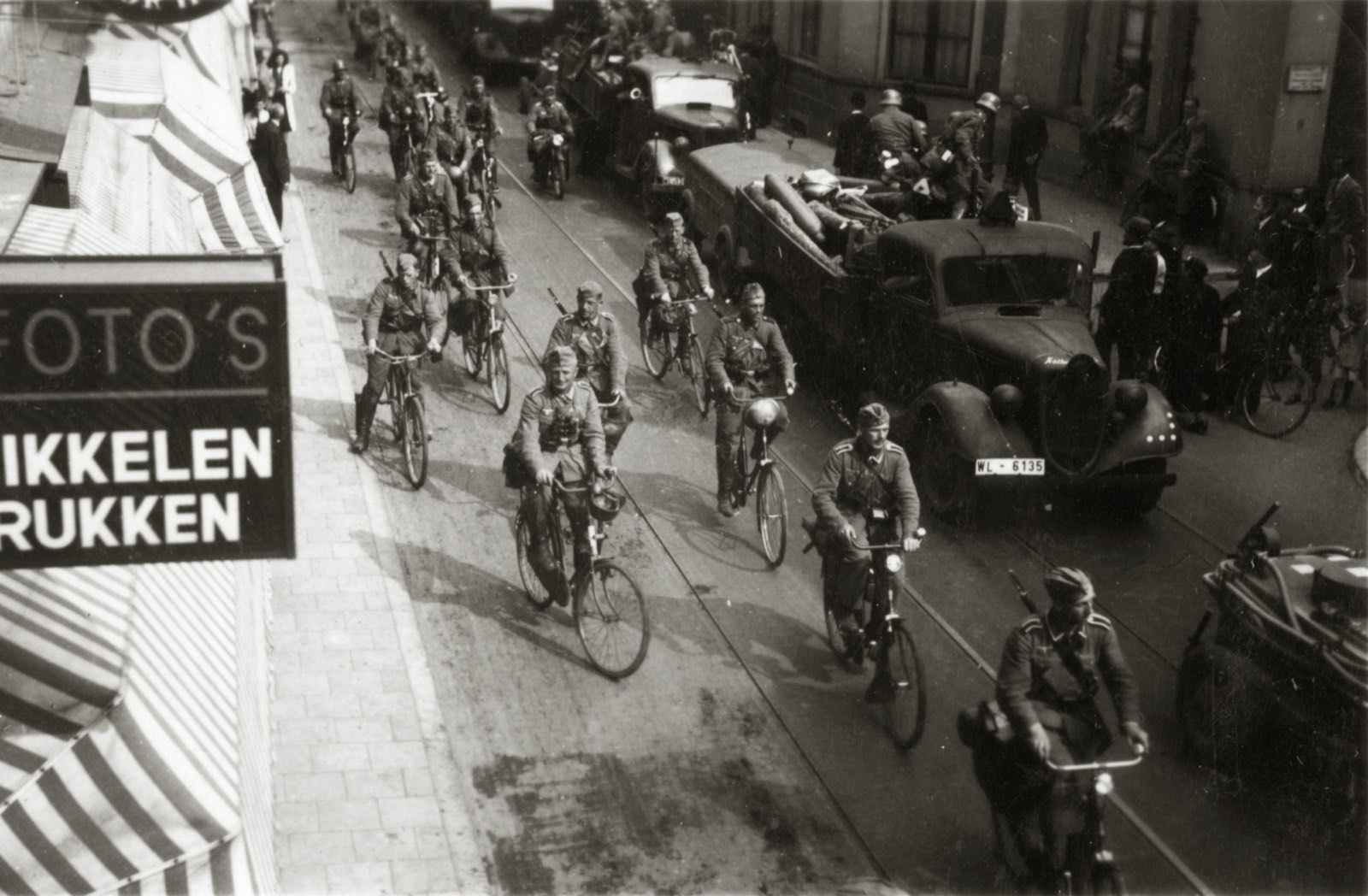
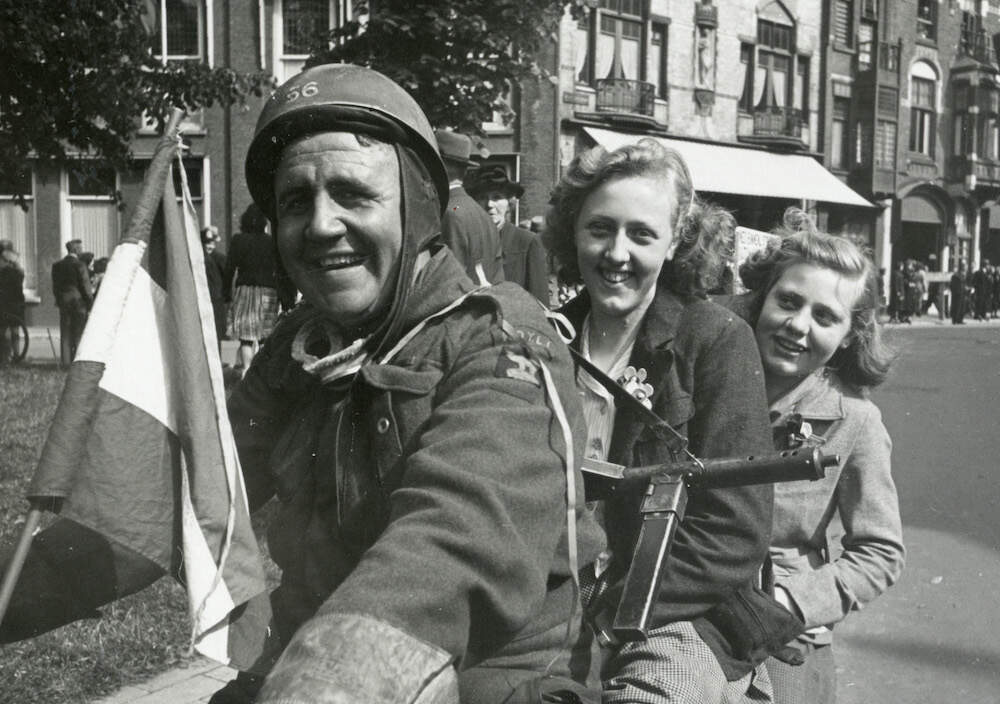
The Second World War hit Utrecht differently than Amsterdam or Rotterdam. There was no dramatic bombing, no February Strike. Instead, the city endured a quieter, grinding occupation. The Germans used the threat of bombing Utrecht — made credible by the destruction of Rotterdam — to force the Dutch surrender in May 1940. During the occupation, Utrecht's Jewish community was systematically rounded up and deported. The city's synagogue on the Springweg was stripped and repurposed. Resistance networks operated in secret — in church basements, university buildings, and along the canals. Students at Utrecht University who refused to sign a Nazi loyalty declaration were sent to labour camps. The final winter of the war, the Hongerwinter of 1944–45, brought starvation to the western Netherlands. People ate tulip bulbs and sugar beets to survive. In Utrecht, the scars of that hunger are less visible than in Amsterdam, but the memory runs just as deep. Liberation came in May 1945, and the city celebrated on the Neude square — the same square where, decades later, the old post office would be transformed into the city's new library.